
Damascus Steel Katana & Folded Pattern Blades pair traditional multi-layer forging artistry with functional full-tang construction. In modern Longquan swordsmithing, Damascus steel (commonly termed folded steel or pattern-welded steel) is produced by repeatedly forge-welding and folding alternating carbon steel billets so each blade carries an unrepeatable natural grain (hada). Best suited for collectors, gift buyers, display enthusiasts, and light-to-moderate target practice, these blades offer striking visual depth alongside reliable structural balance.
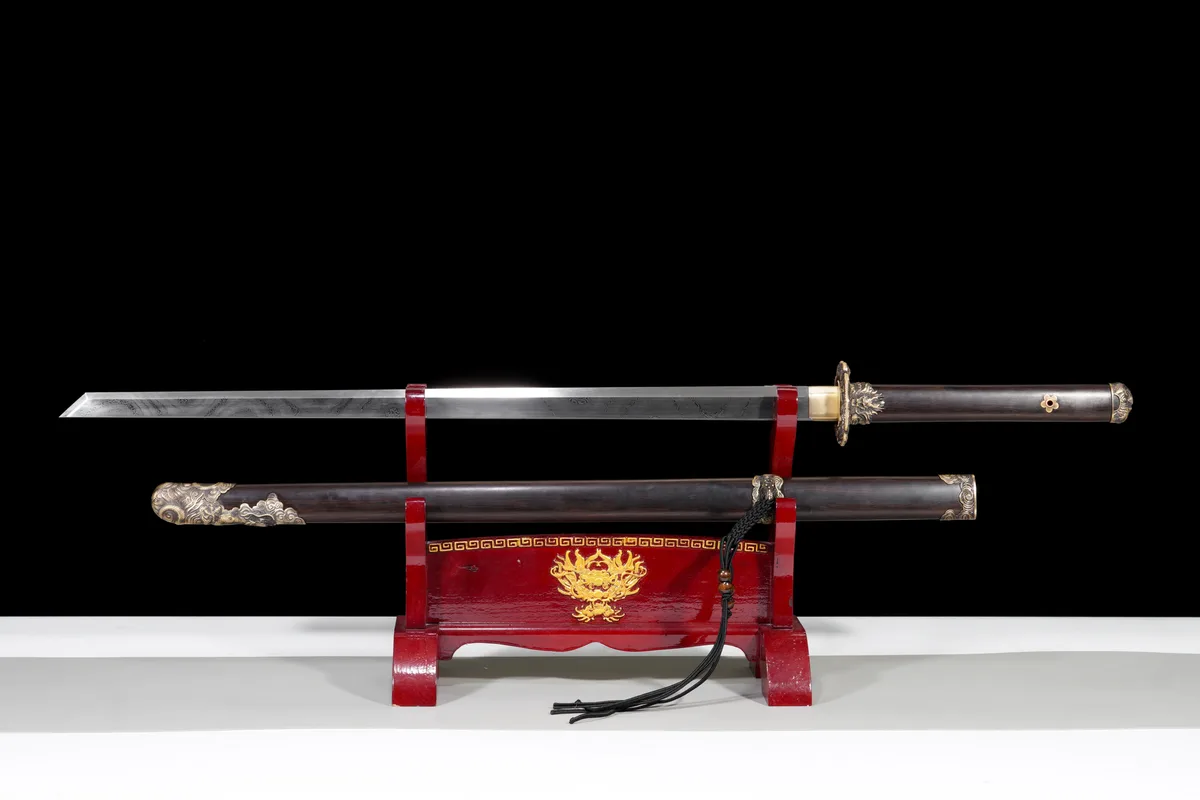
Understanding Modern Folded Damascus Steel (Hada Craftsmanship)
Unlike historical crucible Wootz steel, contemporary folded katana and Tang Dao blades are crafted via pattern-welded forge-folding. Smiths stack complementary carbon steel alloys, heat them to forge-welding temperature, and fold, twist, or draw the billet multiple times before grinding and applying a controlled acid etch to reveal the organic layers. Because the grain runs continuously through the forged steel rather than sitting merely on the surface, no two folded blades ever share the exact same wave or twist pattern.
An honest assessment of metallurgy matters when choosing a folded blade: a higher fold count does not automatically make a blade stronger. Excessive folding without careful temperature control can introduce slag inclusions or decarburization. Performance depends on clean base carbon steel chemistry, defect-free forge welding, proper quenching and tempering, and solid full-tang construction anchored into the hilt. Compare how folded steel balances aesthetics against single-alloy options in our 1060 vs. 1095 vs. T10 Steel Katana Guide, or browse broader buying resources in the TopKatana Buyer Guides Hub.
Folded Damascus vs. Mono-Steel & Choosing Your Edge
| Attribute | Folded Damascus Steel | Mono-Steel (1060 / 1095 / T10) |
|---|---|---|
| Visual Identity | Natural layered hada (twisted, wave, or wood-grain patterns) throughout the blade body | Uniform satin polish or distinct clay-tempered hamon temper line |
| Primary Strengths | One-of-a-kind collector artistry, gifting prestige, and solid light-to-moderate practice capability | Predictable homogeneous hardness optimized for frequent or heavy tameshigiri cutting |
| Sharpened vs. Unsharpened | Sharpened editions handle water bottles and tatami mats; Unsharpened editions suit indoor display and forms | 1060 favors forgiving beginner cuts; 1095/T10 maximize edge retention for seasoned practitioners |
When selecting your piece, check each product specification for edge status and tang structure. Our full-tang battle-ready builds prioritize structural integrity with dual-peg or integrated tang fitment, while unsharpened folded blades provide a safer option for home display, martial arts forms, and photography. For budget planning across steel tiers, review our Katana Price Guide and Best Katana for Beginners.
Shipping Eligibility & Buyer Protection
Every blade is inspected in Longquan before dispatch. We provide free shipping to 14 eligible countries (US, CA, GB, CN, AT, BE, DE, ES, FR, IE, IT, NL, PL, CH) and a flat AU $50 USD shipping rate to Australia, backed by our 30-day return policy. Review full regional details on our Shipping Policy and Return Policy pages before ordering.
Damascus Steel Katana FAQ
Is folded Damascus steel harder or stronger than mono-steel 1095 or T10?
Not necessarily. Folded Damascus steel distributes layers of carbon steel for aesthetic grain and balanced resilience, whereas homogeneous 1095 or T10 tool steel is engineered specifically for uniform edge hardness and heavy cutting performance. Clean heat treatment matters far more than fold count alone.
How can I tell real folded Damascus grain from laser-etched surface patterns?
Authentic folded hada shows organic, irregular variations across the blade spine, bevels, and kissaki tip where grinding intersects the internal steel layers. Laser-etched imitations look mechanically repetitive on the flat sides and disappear along the spine or sharpened edge bevel.
How do I clean and oil a Damascus blade without fading the etched pattern?
Avoid abrasive metal polishes or coarse scouring pads, which strip the contrasting acid-etched finish. Wipe the blade clean after handling using a soft microfiber cloth, and apply a thin coat of mineral or choji blade oil to prevent oxidation while keeping the layered grain crisp.
Can I practice cutting with a Damascus katana, or is it only for display?
Full-tang, sharpened Damascus models are suitable for light-to-moderate cutting drills on soft targets such as water bottles or soaked mats. If you intend to display the sword, practice indoor forms, or present it as a gift, an unsharpened folded edition offers the same forged grain with lower handling risk.
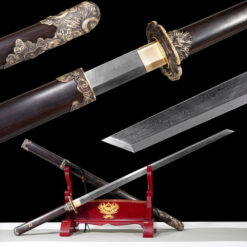
Damascus Steel Katana
The God Slayer – Twisted Damascus Steel Tang Dao | Ebony Wood & Copper Dragon Motif | Battle Ready
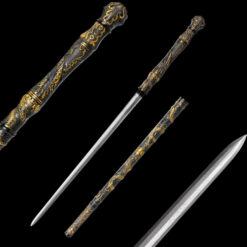
Chinese Swords

Damascus Steel Katana
98cm Handmade Katana: Pattern Steel Purple Blade & Blue Sheath (Unsharpened)